
How to Create a Positive Spiritual Space
A meaningful spiritual space does not need to be large or elaborate. A small, thoughtfully arranged corner can become a place to pause, reconnect with your intention and bring greater mindfulness into everyday life.
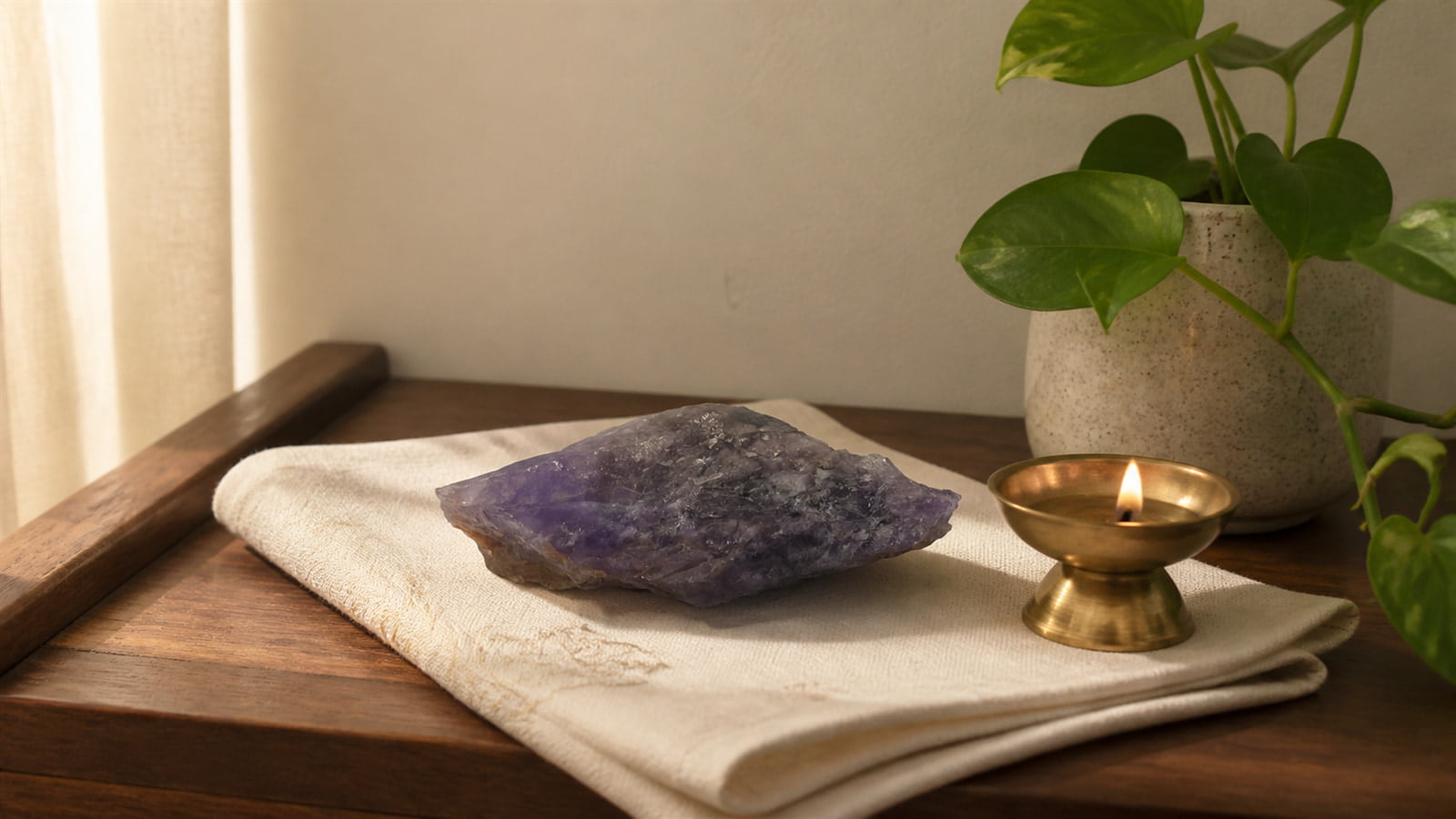
A meaningful space begins with attention
A spiritual space does not need to be a separate prayer room or an elaborate altar.
It may be a peaceful shelf, one clean corner of a room, part of a study table or a small area beside your bed.
What matters most is that the space helps you pause, remember your intention and return to a calmer, more attentive state of mind.
The purpose is not to create the most decorated space. It is to create a place that feels sincere, respectful and easy to maintain.
START WITH INTENTION
Begin by deciding what the space should support.
Before choosing objects or decorations, become clear about why you are creating the space.
Morning prayer?
A quiet place to begin the day
with attention and gratitude.
Study and concentration?
A space that reminds you to
return to focused learning.
Work and prosperity?
A place connected with clarity, responsibility and purposeful action.
Peace within the home?
A calm corner that encourages patience, harmony and reflection.
Choose a place that naturally
fits your life.
Select a location that is reasonably clean, stable and protected from constant disturbance.
A spiritual space does not need to be hidden, but it should not sit where objects are continually moved, knocked over or covered by unrelated items.
A small shelf in a quiet corner, part of a home prayer area, a study desk, workspace, bedside table or peaceful area of the living room can all work well.
Choose somewhere you will naturally encounter during the day. A space that remains completely out of sight can easily become disconnected from everyday practice.
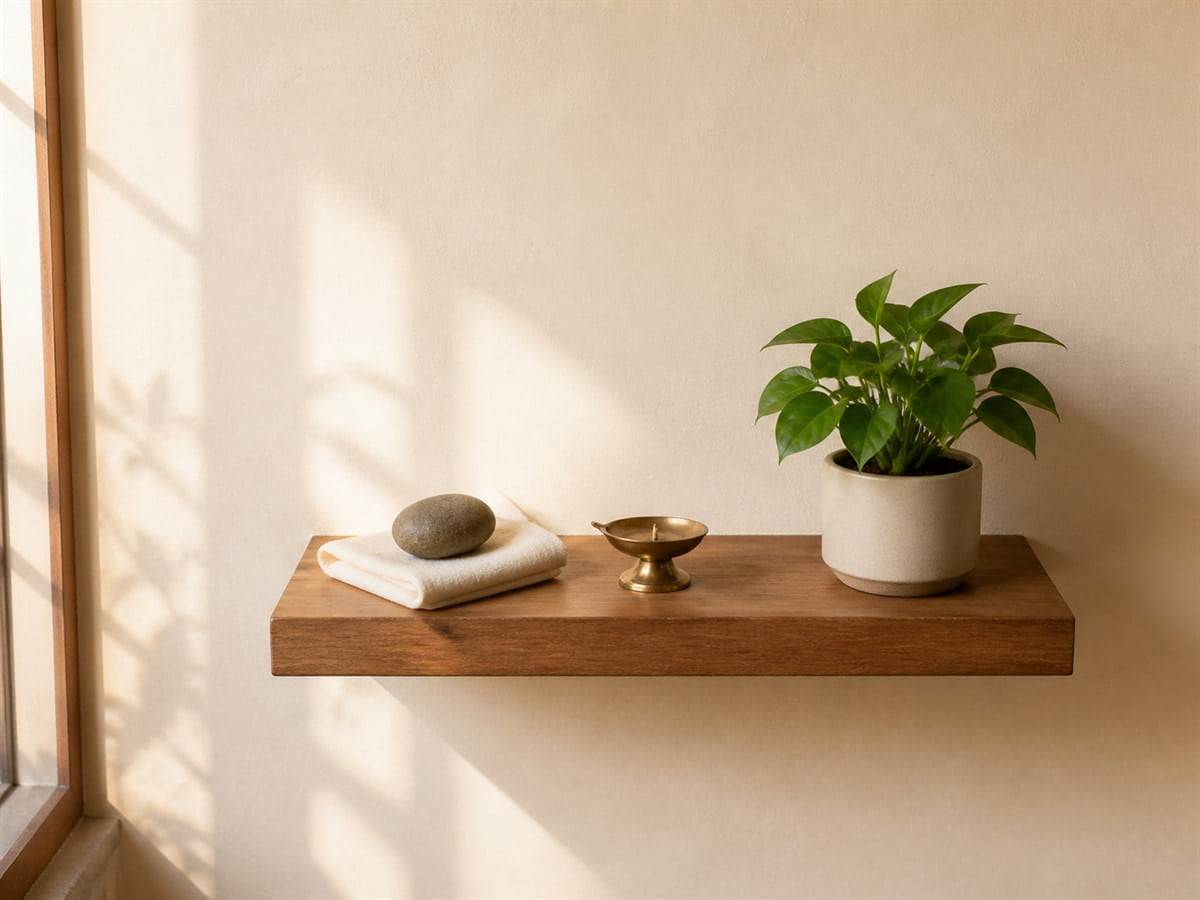
Keep the space simple enough to care for.
You do not need many objects to create meaning.
Too many items can make the space feel visually busy and harder to maintain. Begin with only a few elements that have a clear purpose.
A diya or warm light
Creates a gentle focal point.
A natural stone
Represents the Sankalp you wish to remember.
A flower or plant
Introduces a simple connection with nature.
A clean cloth
Provides a respectful base for the arrangement.
A meaningful symbol
May reflect your personal spiritual tradition or practice.
A spiritual space becomes meaningful through attention and regular use—not through the number or cost of the objects placed within it.
Introduce gentle light.
Light can help create a visible transition between an ordinary moment and a period of prayer or reflection.
A diya can be used where an open flame can be handled safely. In a study area, workplace or home with children or pets,
a small warm lamp or flameless LED candle may be more practical.
The goal is a calm atmosphere, not dramatic illumination.
Add one natural element.
A flower, leaf, small plant or natural stone can soften the arrangement and bring a sense of care and connection with nature.
Choose something that is easy to maintain. A neglected plant or accumulation of dried material may work against the calm, cared-for atmosphere you intended to create.
The aim is not decoration for its own sake. Each element should feel intentional.
THOUGHTFUL PLACEMENT
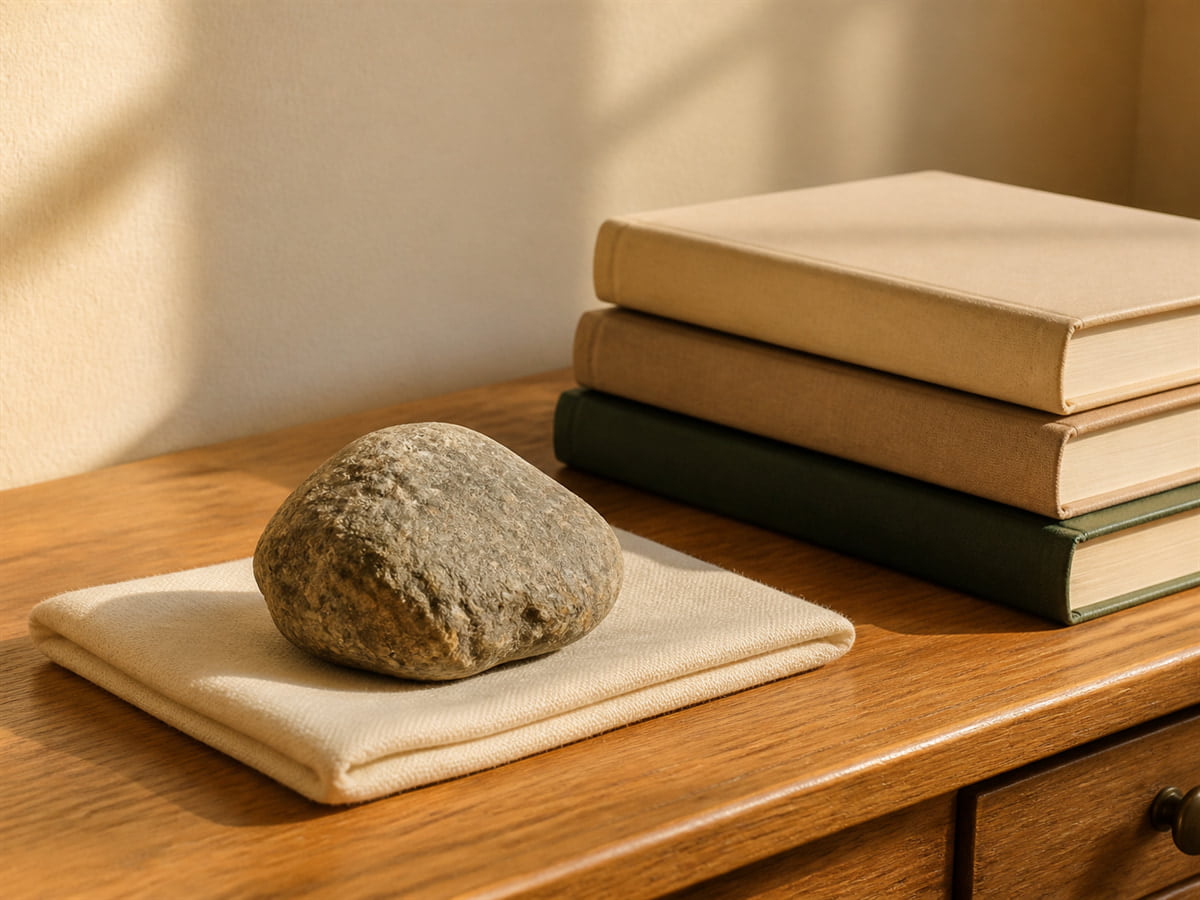
Give your Sankalp stone a
meaningful place.
The most suitable location depends on the intention associated with the stone and the practical care it requires.
Pyrite Dhan Sankalp
Place it on a work desk, in a business space, near a cash counter or within a protected locker area.
Care note: Keep completely dry.
Do not wash or soak.
Sphatik Vidya Sankalp
Place it on a study table, work desk, near books
or within a dedicated learning space.
Care note:Protect from harsh chemicals,
perfume and impact.
Pyrite Dhan Sankalp
Place it in the living room, family space, bedroom or another peaceful corner of the home.
Care note:Protect from chemicals, perfume,
impact and prolonged direct sunlight.
A SIMPLE DAILY PRACTICE
Let the space become part of your day.
A spiritual corner becomes more meaningful when it is connected with a small, repeatable practice. It does not need to take long.
01 - Pause
Sit or stand quietly near the
space and allow yourself
a moment to settle.
02 - Pause
Take three calm breaths and
bring your attention back
to the present moment.
03 - Remember
Repeat your mantra or
speak your personal
Sankalp with sincerity.
04 - Act
Identify one constructive
action you can carry
forward during the day.
Consistency is more valuable than complexity.
Let sound support the space - not overwhelm it.
A bell, mantra or soft instrumental sound can help some people move into a more reflective state of mind.
Keep the volume respectful to other people within the home. A spiritual practice intended to support harmony should not become a source of inconvenience or conflict.
Silence is equally valid. Choose what genuinely helps you become calm and attentive.
Allow your space to change as your life changes.
Your needs and intentions may evolve with time.
A study corner may become less relevant after an examination period. A work-related intention may change as responsibilities grow. A peaceful corner may need to move as the household changes.
You may simplify, rearrange or relocate the space whenever necessary.
Meaning does not depend on keeping the exact same arrangement forever. What matters is that the space remains connected with sincere intention and respectful practice.
Let the calm of the space continue into action.
A spiritual corner should not become the place where intention ends.
After praying for greater focus, return to your studies with attention.
After remembering prosperity, continue your work and financial decisions responsibly.
After asking for harmony, practise patience and thoughtful communication.
The space serves its purpose when the clarity experienced there begins to influence the way you move through the rest of your day.
The purpose of a spiritual space is not to escape everyday life.
It is to help you return to everyday life with greater intention.
OUR PRODUCTS
Pyrite Dhan Sankalp

Sphatik Vidya Sankalp

Amethyst Griha Shanti Sankalp

YOUR SANKALP JOURNAL
Explore intention, energy and mindful spiritual living.
Thoughtful guidance to help you understand Sankalp, ritual preparation, positive energy and the role of mindful action in everyday life.

What Is a Sankalp?
Discover how a Sankalp differs from an ordinary wish and how clarity, faith and positive action give an intention direction.
Why Ritual Preparation Matters
Understand how thoughtful selection, purification, prayer and intention transform the experience of receiving a ritual stone.